
Course
US Residential Mortgage Underwriting
Learn the complete U.S. residential mortgage underwriting process, including income analysis, credit evaluation, property appraisal, compliance, risk assessment, and final loan approval through practical real-world scenarios.
Duration
45 days
Mode
online
Level
Beginner
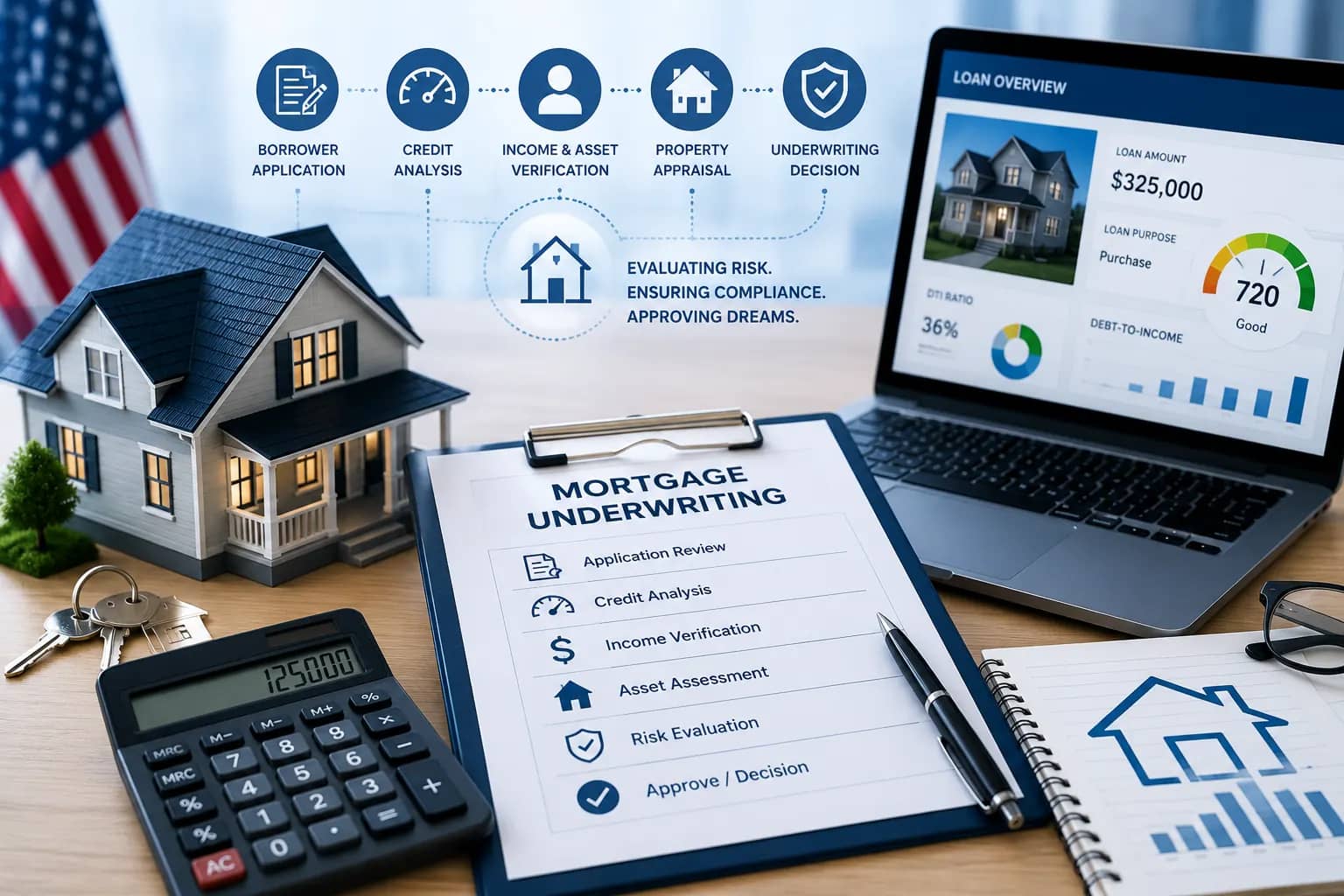
US Residential Mortgage Underwriting
Course Overview
The US Residential Mortgage Underwriting program is designed for graduates, finance professionals, banking aspirants, and individuals seeking a career in the U.S. mortgage industry. This comprehensive training provides in-depth knowledge of the complete residential mortgage underwriting process, from loan application to final approval. Participants gain practical exposure through real-time mortgage scenarios, live file analysis, and industry-standard underwriting practices. By the end of the course, learners will have the skills and confidence required to evaluate mortgage applications accurately while following U.S. lending guidelines and compliance standards.
Introduction to the Mortgage Industry & Loan Process
This section provides a complete understanding of the U.S. residential mortgage industry, including the roles of lenders, borrowers, brokers, underwriters, and investors. Learners gain knowledge of the end-to-end mortgage loan process, beginning with loan application and documentation through processing, underwriting, approval, funding, and loan closing. This foundation helps students understand how every stage contributes to successful mortgage lending.
Borrower Eligibility & Loan Programs
Students learn how to determine whether a borrower qualifies for different mortgage products based on financial profile, employment history, income stability, and creditworthiness. The training also covers various U.S. loan programs, including Conventional Loans, FHA Loans, VA Loans, and USDA Loans, enabling learners to understand the eligibility requirements and benefits of each program.
Income Analysis & Employment Verification
This section focuses on evaluating borrower income accurately using industry-standard underwriting methods. Learners understand salary calculations, overtime, bonuses, commissions, hourly wages, and self-employed income analysis. They also learn how to verify employment records and assess income consistency to determine repayment capacity while following agency guidelines.
Credit Report Analysis & Liability Assessment
Understanding a borrower's credit profile is essential in mortgage underwriting. Students learn how to read and interpret credit reports, evaluate credit scores, identify payment history, review outstanding liabilities, and calculate monthly debt obligations. This knowledge enables learners to assess financial responsibility and identify potential lending risks.
Asset Documentation & Source of Funds
Learners understand how to review bank statements, savings accounts, investment accounts, retirement funds, and other financial assets. The training explains how to verify the source of funds used for down payments and closing costs while ensuring that all financial documentation complies with mortgage underwriting requirements and regulatory guidelines.
Property Valuation & Appraisal Review
This section introduces the property evaluation process used in mortgage lending. Students learn how professional appraisals determine market value, analyze comparable sales, review appraisal reports, and identify property-related risks. They also understand how property valuation directly impacts loan approval decisions and lending policies.
Debt-to-Income Ratio & Loan-to-Value Analysis
Students learn how to calculate and evaluate Debt-to-Income (DTI) and Loan-to-Value (LTV) ratios, two of the most critical factors in mortgage underwriting. The training explains how these financial calculations influence loan eligibility, lending risk, approval conditions, and mortgage pricing according to U.S. underwriting standards.
Risk Assessment & Underwriting Guidelines
This section develops the analytical skills required to evaluate mortgage applications objectively. Learners understand underwriting guidelines established by Fannie Mae, Freddie Mac, FHA, VA, and other lending agencies. They learn how to identify lending risks, review documentation, evaluate borrower strength, and make informed underwriting decisions based on established policies.
Compliance Requirements & Fraud Detection
Mortgage underwriters must ensure compliance with federal lending regulations while identifying suspicious activities. Students learn about U.S. mortgage compliance requirements, regulatory standards, anti-fraud practices, document verification techniques, red flag identification, and methods used to detect mortgage fraud before loan approval.
Conditions & Suspense Review
This section explains how underwriters review outstanding loan conditions before issuing final approval. Learners understand how to identify missing documents, request additional information, evaluate suspense conditions, and ensure that every underwriting requirement has been satisfied before proceeding to the final loan decision.
Final Underwriting Decision
Students learn the complete decision-making process involved in approving, suspending, or declining mortgage applications. The training explains how underwriters prepare approval conditions, issue final underwriting decisions, document findings, and communicate with processors, lenders, and other stakeholders throughout the loan approval process.
Live File Review & Real-Time Mortgage Projects
The course concludes with practical exposure to live mortgage files and real-world underwriting scenarios. Learners analyze actual residential mortgage cases, review supporting documents, perform underwriting calculations, and make loan recommendations based on industry standards. These practical projects help students build confidence and prepare for real workplace responsibilities in the U.S. mortgage industry.
Career Opportunities
After successfully completing this training, learners can pursue rewarding careers in the U.S. mortgage and banking industry as a Mortgage Underwriter, Loan Processor, Credit Analyst, Mortgage Quality Analyst, or Mortgage Operations Executive. These roles are available in mortgage servicing companies, financial institutions, banking organizations, BPO/KPO firms, and global mortgage outsourcing companies serving the U.S. market.
Course Features
The training program is designed with a strong focus on practical learning and real-world mortgage processing. Participants receive hands-on experience by working with real mortgage files under the guidance of experienced industry professionals. The course includes live projects, industry-standard underwriting practices, placement assistance, interview preparation, career guidance, and a Course Completion Certificate, helping learners become job-ready professionals for the U.S. residential mortgage industry.
Need this training for your team?
Share your team size, schedule, and location. Athena Solutions will align the course plan for your operation.